
Keep the mud on the lot
Silt Fence & Inlet Protection in Austin, TX
Sediment control installed to your plan, kept up through the job, and pulled when the grass is in.
- Free on-site measuring and a written, itemized quote
- Seed picked for your soil: Hill Country rock or Blackland clay
- Erosion and silt fence work planned around TCEQ and city rules
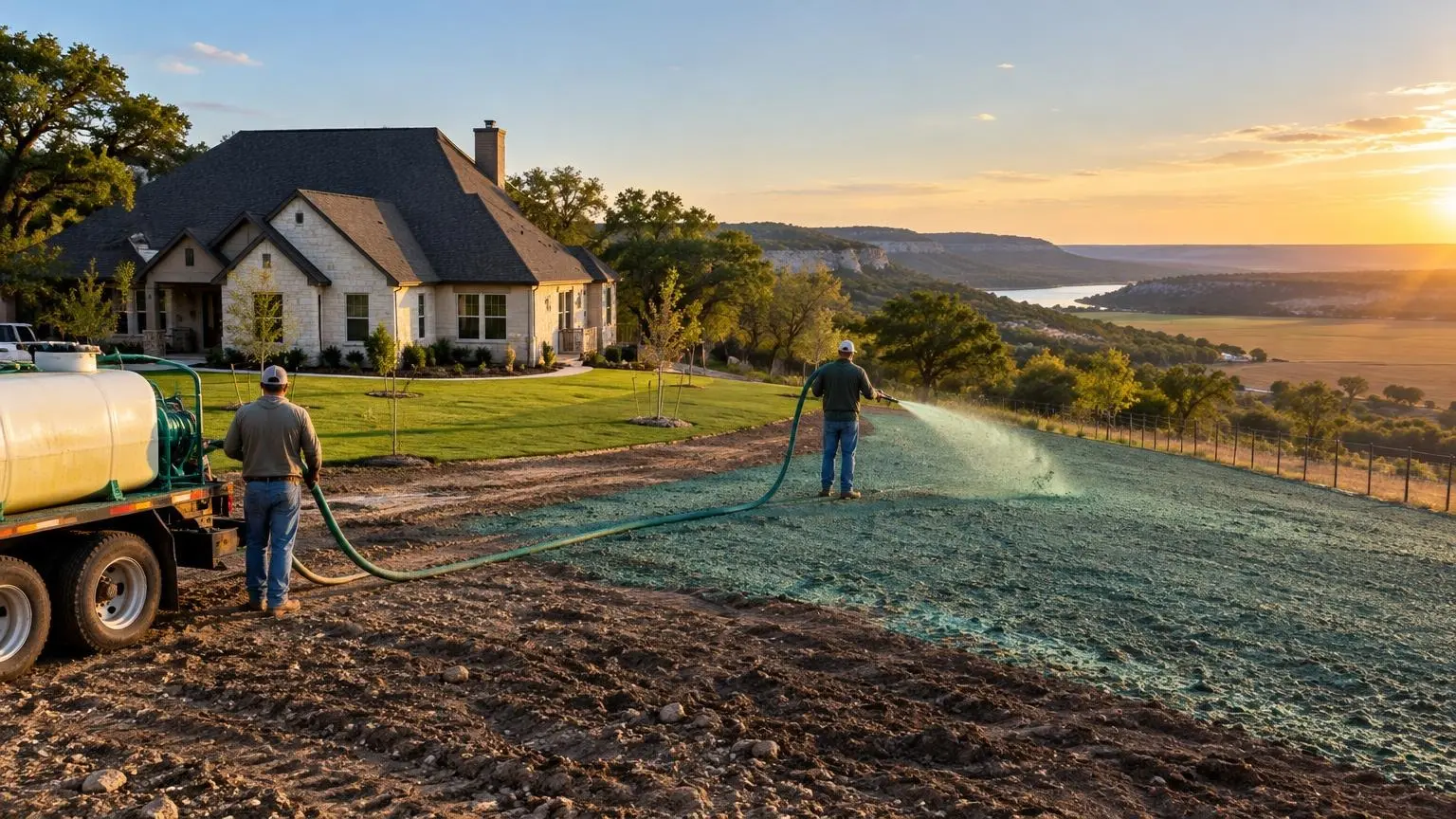
Sediment Control for Storm-Prone Ground
Silt fence and inlet protection in Austin keep soil from leaving a construction site in runoff and ending up in the street, a storm drain, a creek or one of the lakes. We install silt fence along the downhill edges of disturbed ground, protect curb and drop inlets, and add other sediment control where a plan calls for it. Builders, remodelers, pool and septic contractors and homeowners clearing land call us. As silt fence contractors we also seed, so when the ground is stable we can pull the fence and leave grass behind.
Why it matters here
Austin's soils and storms make sediment a real problem. West of town, thin soil over limestone sheds runoff fast. East of town, bare blackland clay erodes in sheets. In October 2018, flood runoff loaded the Highland Lakes, the city's main water supply, with silt and debris, and Austin had a week-long boil-water advisory. Austin Watershed Protection's job is to cut flooding, erosion and water pollution, and sediment from construction is part of that. A few hundred feet of well-placed fence is a small cost against a red tag or a muddy street.
When it is required
The TCEQ Construction General Permit applies when a project disturbs one acre or more, and also when a smaller lot belongs to a bigger development that will cross that line in total. Covered sites need a Stormwater Pollution Prevention Plan in place before work starts, and that plan lays out the best management practices, including sediment controls. Sites under an acre that are not part of a larger plan are not covered by that state permit, but local rules may still apply, and in the Edwards Aquifer recharge and contributing zones TCEQ has its own program requirements. When there is a plan, we install to it. When there is not, we recommend what the site needs and explain why.
Placement is most of the job
Silt fence works by slowing sheet flow so sediment drops out behind it. It is not built to stop concentrated flow in a ditch or to hold back a creek. We run it along the contour on the downhill side, turn the ends uphill so water cannot go around, and bury the bottom of the fabric in a trench so water cannot go under. On rocky hill-country lots where trenching is hard, we use other options such as sediment logs or rock berms. On clay, we trench when the ground is workable, not when it is a brick.
Inlet protection
The curb inlets in front of a lot are where sediment ends up first. We protect them with silt fence barriers, filter bags, sandbags or gravel and mesh, depending on the inlet type and traffic. Drop inlets in yards and parking areas get fence or gravel barriers around them. Inlet protection has to be checked after rain because it fills up. We can schedule that or show your crew what to look for.
Maintenance and removal
Silt fence that is knocked down, buried or torn does nothing. After storms, fence should be checked, sediment removed when it builds up, and gaps repaired. We offer repair visits. When the ground behind the fence is covered and growing, the fence can come out. We pull it, haul it off, smooth the slot where it was buried and spray seed down that strip too, so the lot ends up with grass along the old fence line instead of shredded fabric.
Builders and homeowners
For builders with many lots, we can quote by the foot for the whole phase and come back as each lot is released. For a homeowner with one pool or addition, we install what that job needs. Either way, the quote lists footage, inlet count and any repairs or removal.
Sediment Control Work
Installed to plan, maintained, and removed when the site is stable.
Silt fence installation
Trenched-in fabric fence along the downhill edges of disturbed ground.
Reinforced silt fence
Wire-backed fence for longer runs and heavier sediment loads.
Curb inlet protection
Filter bags, sandbags or barriers at street inlets in front of the lot.
Drop inlet protection
Fence or gravel and mesh rings around yard and parking lot inlets.
Sediment logs and rock berms
Alternatives for rocky ground and places fence cannot be trenched.
Repairs, cleanout and removal
Storm repairs during the job, then removal and seeding of the fence line.
Sediment Control Benchmarks
| Item | Rate |
|---|---|
| Standard silt fence, no wire backing, each 100 ft (state DOT 2025 erosion unit prices) | $378 |
| Wire-backed silt fence, each 100 ft (same DOT 2025 list) | $748 |
| Silt fence ring around a single inlet (same DOT 2025 list) | $102 |
| Sandbag inlet barrier, one inlet (same DOT 2025 list) | $141 |
| Rock-and-mesh inlet filter, one inlet (same DOT 2025 list) | $172 |
Reference figures from one state transportation department's 2025 erosion-control unit prices. An Austin job is costed once we walk the footage and count the inlets, and that written quote is the amount you are billed.
Install to Removal
1. Plan or walk-through
We follow the SWP3 or erosion plan, or walk the lot and mark where fence and inlet protection belong.
2. Install
Fence trenched and staked on contour, inlets protected before grading starts.
3. Maintain
Repairs and sediment cleanout after storms, on call or on a schedule.
4. Remove and seed
Once the ground is covered, fence is pulled, the trench line raked and seeded.

Why Choose Us for Silt Fence & Inlet Protection
Fence and seed from one company
We can finish the job by seeding what the fence was protecting.
Installed to hold
Trenched, on contour, ends turned up, so it works in an Austin downpour.
Footage on paper
Quotes list feet of fence and each inlet.
Silt Fence & Inlet Protection Questions
Is silt fence needed on a site under one acre in Austin?
The TCEQ construction permit does not cover sites under an acre that are not part of a larger plan of development, but city or county rules and your builder or HOA may still require sediment controls. We can install what your plan or inspector asks for.
Can silt fence go across a ditch?
It should not. Silt fence is for sheet flow. In ditches and channels, rock checks, sediment logs or other measures are used instead.
What happens to silt fence when the job is done?
Once the disturbed area is stabilized, we remove the fence, haul it off, rake the trench line and seed it.
Do silt fence contractors work on rocky lots?
Yes, but trenching into limestone is slow. On rocky ground we often switch to sediment logs or rock berms that sit on the surface.
Silt Fence & Inlet Protection Service Areas
- Hydroseeding in Austin, TX
- Hydroseeding in Round Rock, TX
- Hydroseeding in Cedar Park, TX
- Hydroseeding in Leander, TX
- Hydroseeding in Georgetown, TX
- Hydroseeding in Pflugerville, TX
- Hydroseeding in Hutto, TX
- Hydroseeding in Taylor, TX
- Hydroseeding in Elgin, TX
- Hydroseeding in Manor, TX
- Hydroseeding in Bastrop, TX
- Hydroseeding in Kyle, TX
- Hydroseeding in Buda, TX
- Hydroseeding in San Marcos, TX
- Hydroseeding in Wimberley, TX
- Hydroseeding in Dripping Springs, TX
- Hydroseeding in Lakeway, TX
- Hydroseeding in Lago Vista, TX
- Hydroseeding in Jonestown, TX
- Hydroseeding in Marble Falls, TX
- Hydroseeding in Lockhart, TX
Get a Silt Fence & Inlet Protection Estimate
Tell us the lot size and number of inlets and we will quote by the foot.