
Large areas, permit deadlines
Builder & Commercial Hydroseeding in Austin, TX
Acres of bare ground seeded and mulched for final stabilization, from lot lines to detention ponds.
- Free on-site measuring and a written, itemized quote
- Seed picked for your soil: Hill Country rock or Blackland clay
- Erosion and silt fence work planned around TCEQ and city rules
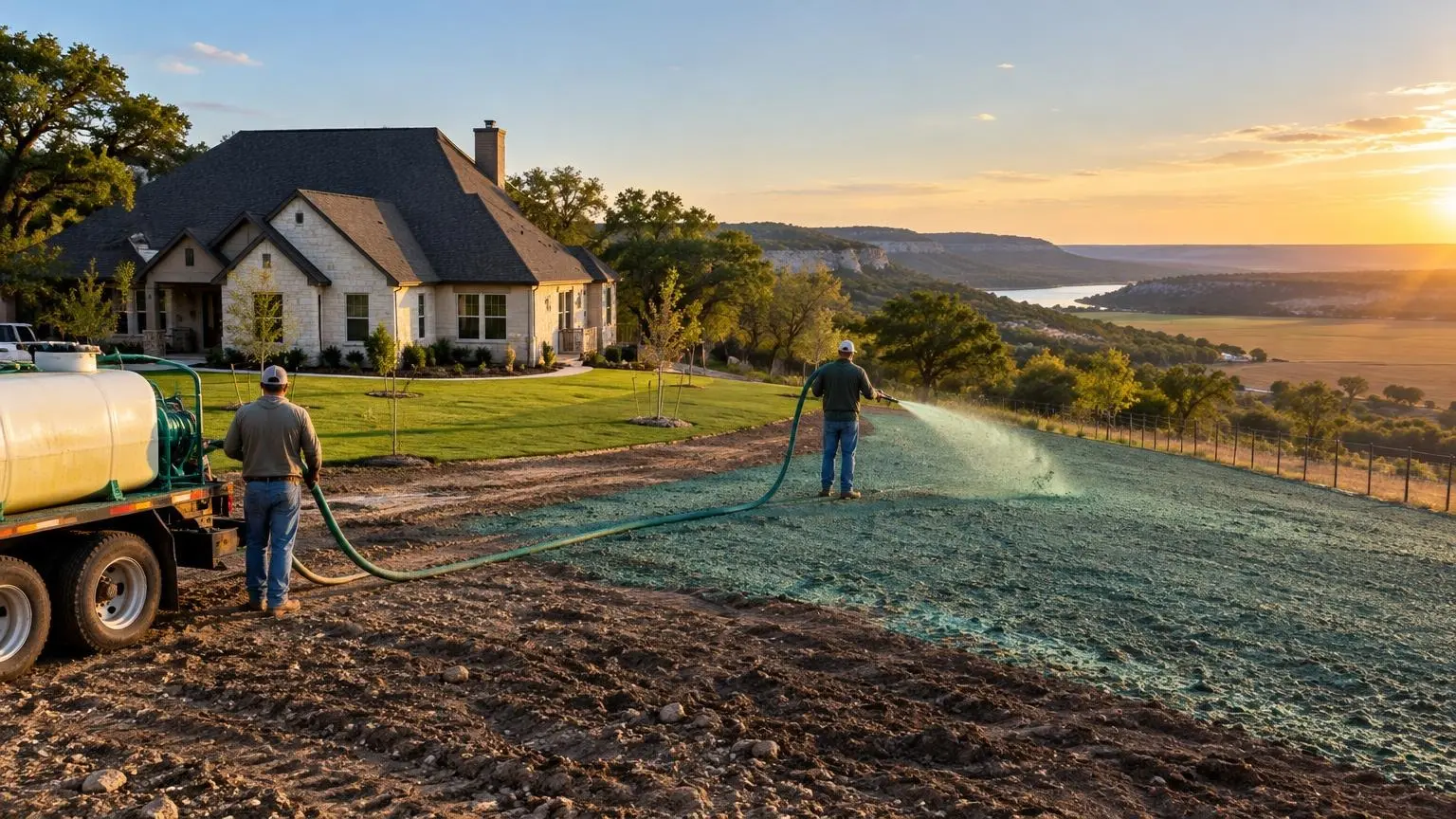
Covering Acres Before the Next Storm
Builder and commercial hydroseeding in Austin is about getting large areas of disturbed ground covered and growing so a project can close out. Our trucks carry the tank volume to spray whole phases of a subdivision, commercial pads, road shoulders, detention and water quality ponds, pipeline and utility corridors, and parks. General contractors, home builders, site work companies and public agencies call us when a schedule, an inspector or a stormwater plan says the dirt has to be covered.
Why stabilization is part of the permit
In Texas, construction that disturbs an acre or more and discharges stormwater to surface water is covered by the TCEQ Construction General Permit, TXR150000. Sites of 1 to 5 acres are small construction activities and sites of 5 acres or more are large, and a smaller lot that is part of a larger common plan of development counts toward the bigger number. Before grading begins, the permit calls for a Stormwater Pollution Prevention Plan, and that plan spells out how disturbed ground will be stabilized. Seed and mulch are usually a big part of the answer. We work to the plan and the sheet your engineer issued.
Building over the aquifer
A lot of the Austin area's growth west of I-35 sits over the Edwards Aquifer recharge and contributing zones. The recharge zone follows the Balcones Fault, and its karst limestone moves water, and anything carried in it, quickly. TCEQ tells anyone clearing land or building in those zones in Hays, Travis or Williamson County to contact its Austin regional office for Edwards Aquifer program requirements. On those sites, fast cover is not cosmetic. We coordinate with the site superintendent so seeding follows grading closely.
East-side clay and big flat phases
The subdivisions going in on the prairie east and northeast of the city are mostly flat, on dark clay that swells when wet, cracks when dry and erodes when bare. Big open phases there tend to sheet water toward the street and inlets. We spray lot by lot as the builder releases them, or whole phases at once, and we can pair the seeding with silt fence and inlet protection so the sediment controls and the cover come from one crew.
Seed mixes for commercial ground
Not every site needs a lawn. Pond banks, shoulders and open space often get a native or low-input mix that will survive without irrigation once it is up. Commercial frontage and amenity lawns usually get Bermuda. Where a site has to be covered in the cool months before warm-season grass will grow, we can spray a temporary cover or hydromulch so the ground is protected now, then come back to establish permanent grass in spring. We put the mix and rates on the quote so your SWP3 records match.
How large jobs are priced
Per-acre pricing for large areas varies with access, how far we haul water, slope, seed type and how many mobilizations the schedule needs. Public bid results give a sense of the range: in 2023, North Little Rock, Arkansas received hydroseeding bids of $2,595 and $3,325 per acre for a park recovery job. Consumer guides run from $2,000 to $4,000 an acre at Fixr to $2,136 to $4,897 at LawnStarter. Among hydroseeding contractors, the real differences are usually in mobilization counts and how much water has to be trucked in.
Working with your schedule
We can mobilize for a single pad or come back phase after phase. Tell us the total acreage, how many trips you expect, whether water is available on site, and whether the inspector has a deadline. For builders who need repeat work, we can set a per-acre or per-lot rate in writing for the whole project.
Sites We Seed
From one commercial pad to a multi-phase development.
Subdivision lots and phases
Front yards, parkways and common areas sprayed as lots are released.
Commercial and retail pads
Landscape strips, frontage and pad perimeters seeded for final stabilization.
Detention and water quality ponds
Basin floors and side slopes sown with mixes that can sit flooded after a storm and then go bone dry for weeks.
Roadsides and right-of-way
Shoulders, medians and ditches on new streets and road projects.
Utility and pipeline corridors
Long strips of restored ground seeded and mulched after trenching.
Temporary cover
Seed and mulch to hold ground that will sit idle before the next phase.
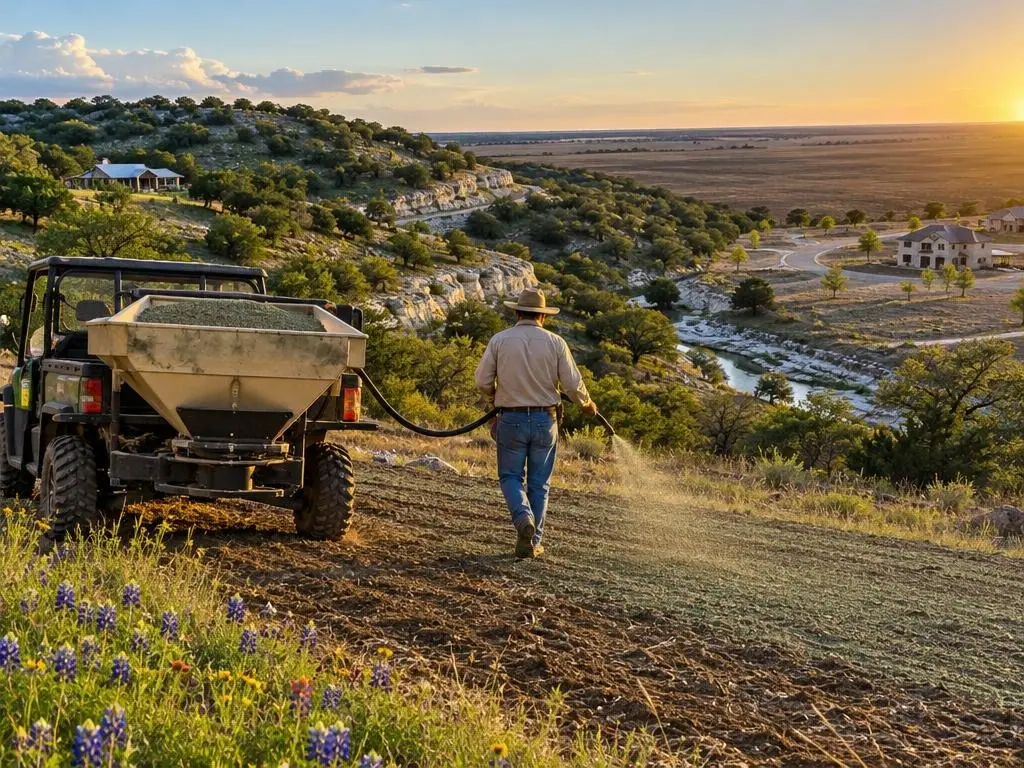
Published Per-Acre Ranges for Large Areas
| Area or source | Range |
|---|---|
| Per acre, Fixr | $2,000 to $4,000 |
| Per acre, LawnStarter | $2,136 to $4,897 |
| One acre, HomeAdvisor | $2,600 to $8,700 |
| Public bids, North Little Rock AR park job, 2023 | $2,595 and $3,325 per acre |
These figures are from the named guides and one public bid, not Austin quotes. We price your site per acre or per lot in a written estimate, and that estimate is what you pay.
How a Commercial Job Runs
1. Plan review
We read the SWP3, the stabilization notes and the seed spec, and walk the site.
2. Written proposal
Acreage, mixes, rates, mobilizations and water source in writing.
3. Coordinate with grading
We schedule each area as the grading contractor finishes it.
4. Spray and record
Areas sprayed, dates and materials logged for your stormwater records.
5. Follow-up
Thin or washed areas re-sprayed so the site can reach final stabilization.
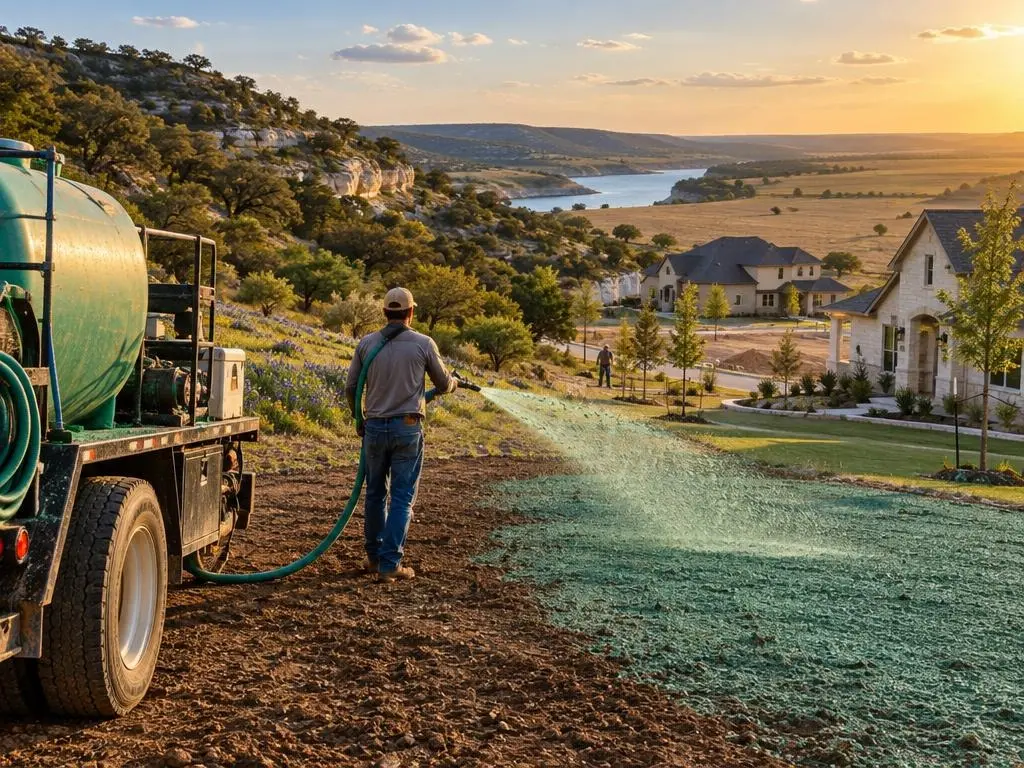
Why Choose Us for Builder & Commercial Hydroseeding
One crew for seed and sediment
Silt fence, inlet protection, blankets and hydroseed from one schedule.
Records you can file
Dates, areas and materials written down for your SWP3 binder.
Phase-by-phase pricing
Set rates in writing so repeat mobilizations are predictable.
Builder & Commercial Hydroseeding Questions
Do you work as a subcontractor to the general contractor?
Yes. Builders, site contractors and GCs make up the bulk of our commercial jobs. We follow your plans and your schedule.
What do hydroseeding companies need from us to quote?
Total acreage or a site plan, the seed spec if there is one, the number of trips you expect, and whether there is water on site. Photos of access points help.
Can you seed in winter for a permit deadline?
We can cover ground in winter with hydromulch or a temporary seed so it is protected. Permanent warm-season grass establishes best once the soil warms in spring.
Do you provide inspection or SWP3 documentation?
We record what we installed, where and when, for your records. The plan itself and the inspections stay with the operator named on the permit.
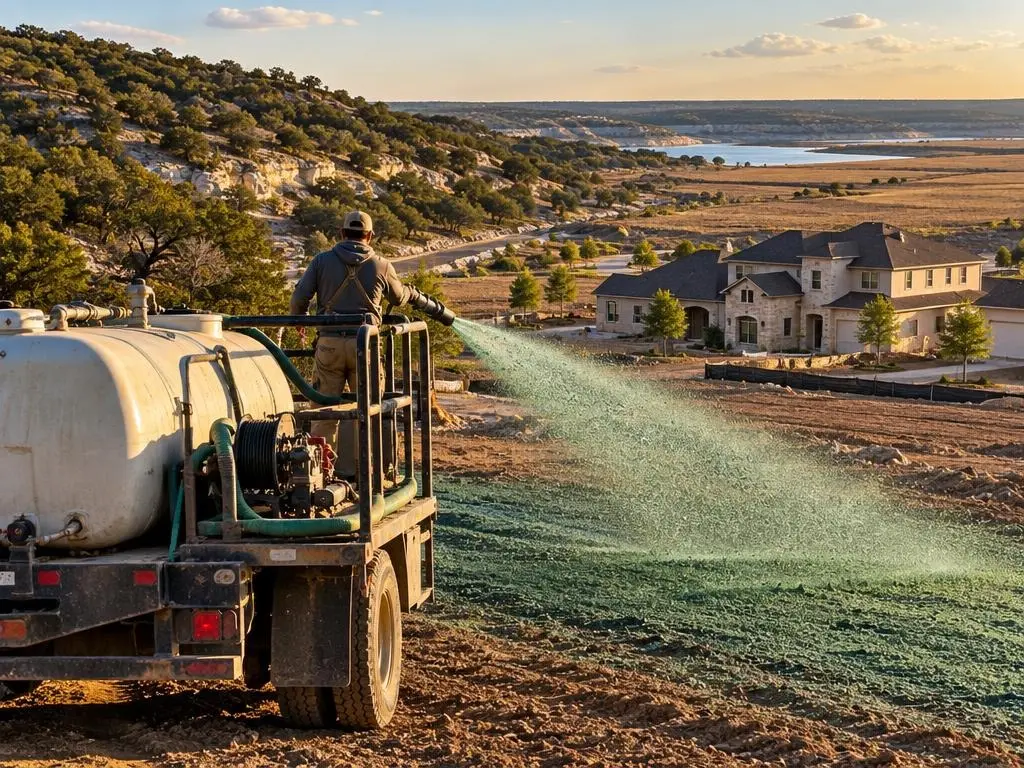
Builder & Commercial Hydroseeding Service Areas
- Hydroseeding in Austin, TX
- Hydroseeding in Round Rock, TX
- Hydroseeding in Cedar Park, TX
- Hydroseeding in Leander, TX
- Hydroseeding in Georgetown, TX
- Hydroseeding in Pflugerville, TX
- Hydroseeding in Hutto, TX
- Hydroseeding in Taylor, TX
- Hydroseeding in Elgin, TX
- Hydroseeding in Manor, TX
- Hydroseeding in Bastrop, TX
- Hydroseeding in Kyle, TX
- Hydroseeding in Buda, TX
- Hydroseeding in San Marcos, TX
- Hydroseeding in Wimberley, TX
- Hydroseeding in Dripping Springs, TX
- Hydroseeding in Lakeway, TX
- Hydroseeding in Lago Vista, TX
- Hydroseeding in Jonestown, TX
- Hydroseeding in Marble Falls, TX
- Hydroseeding in Lockhart, TX
Get a Builder & Commercial Hydroseeding Estimate
Send the site plan and acreage and we will turn around a written proposal.