
Prairie and Hill Country mixes
Native Grass & Wildflower Seeding in Austin, TX
Low-water cover for acreage, slopes and open space, using grasses that belong in Central Texas.
- Free on-site measuring and a written, itemized quote
- Seed picked for your soil: Hill Country rock or Blackland clay
- Erosion and silt fence work planned around TCEQ and city rules
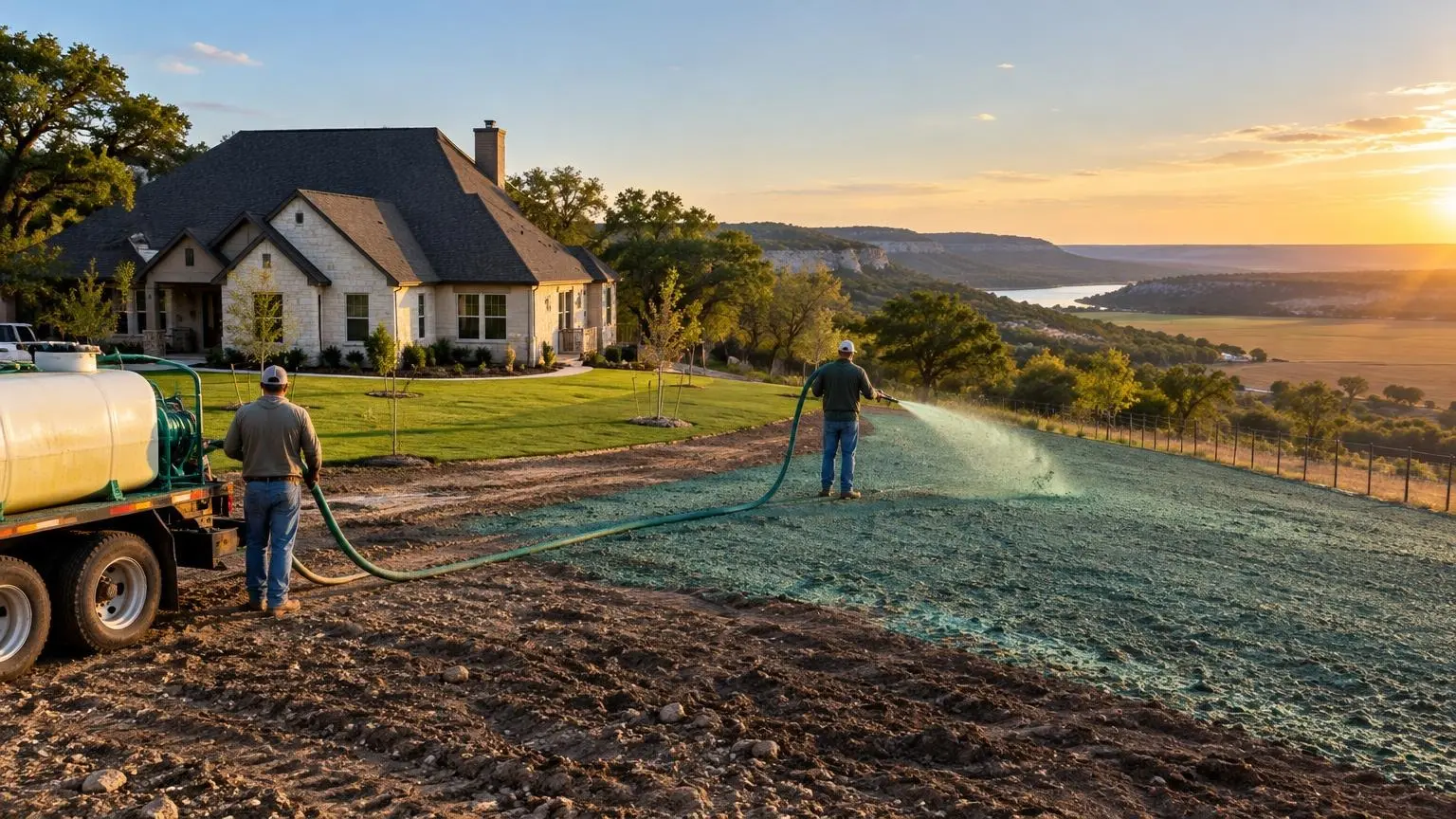
Planting What Grew Here First
Native grass and wildflower seeding in Austin is for ground that does not need to be a mown lawn: acreage, back pastures, slopes, detention pond banks, HOA open space, roadside strips and the far corners of big lots. We hydroseed or drill native grass mixes, often with wildflowers, so the ground is covered with plants suited to Central Texas heat and dry spells. Homeowners on acreage, ranch and venue owners, builders with open space and public agencies all call for it.
What grew here
The land east of Austin was tallgrass prairie. The Texas Blackland Prairie once ran about 300 miles from the Red River to San Antonio, and less than 1 percent of its original vegetation is left. On Houston Black clay, its classic soil, the native cover was mostly big bluestem, sideoats grama, switchgrass, little bluestem and indiangrass. Those same grasses are the backbone of many prairie seed mixes today. West of the fault, the Hill Country's thin soils over limestone support their own shorter and tougher mixes, and the Austin area is known for wildflowers that bloom through the year, especially in spring, bluebonnets among them.
Buffalograss as a low-water lawn
Buffalograss is a native shortgrass prairie species that is used for low-water lawns and xeriscaping. It recovers from drought and grazing by spreading on runners. For homeowners who want something that looks like a lawn without the water of Bermuda, a buffalograss lawn or a buffalograss and blue grama blend is worth considering. It will not stand up to heavy shade or constant foot traffic as well as Bermuda, and it does not stay green through winter.
Why go native
The 2011 drought showed what dry years can do here: from October 2010 through September 2011, Austin's main weather stations got less than a third of normal rainfall. Native grasses are adapted to that kind of swing. Once established, many survive with little or no irrigation, need mowing once or twice a year instead of weekly, and root deeply enough to hold soil on slopes and banks. For land that drains toward a creek or sits over the aquifer zone, that deep, permanent cover does a lot of quiet erosion control.
Getting a meadow started
Native seed is slower than Bermuda and less forgiving of weeds. The first year often looks thin, with annual weeds and a few wildflowers, while the perennial grasses put down roots. Site prep makes the biggest difference: clearing existing weeds and Bermuda, a firm seed bed, and good seed-to-soil contact. On slopes and bare ground we hydroseed the mix with mulch so it stays put; on open flat acreage, drilling can be better. Expect the second and third years to look far better than the first.
Timing
Warm-season native grasses establish best once the soil is warm in spring and early summer, the same window as a Bermuda lawn. Wildflower mixes often have a different sowing window, and we follow the seed supplier's recommended dates for the species in your mix. When a project wants both grass and flowers, we may split it into two visits or choose a blend built for one window.
What it costs
There is no reliable current published price for a contractor-installed native meadow. The spraying itself costs about what hydroseeding a lawn does, but native seed is often more expensive per acre and prep can be heavier. We look at the ground, agree on a mix and put the price in writing.
Native Seeding Options
Mixes and methods chosen for the site and the season.
Prairie grass mixes
Bluestems, indiangrass, switchgrass and sideoats grama for clay and open land.
Hill Country mixes
Shorter, drought-tough grasses for thin soil over limestone.
Wildflower seeding
Spring-blooming native wildflowers sown in the right season, alone or with grasses.
Buffalograss lawns
Low-water native lawns for sunny yards and large lots.
Slope and pond-bank cover
Deep-rooted native mixes hydroseeded with mulch to hold banks.
Site prep for meadows
Clearing weeds and existing turf, then a firm seed bed for good contact.
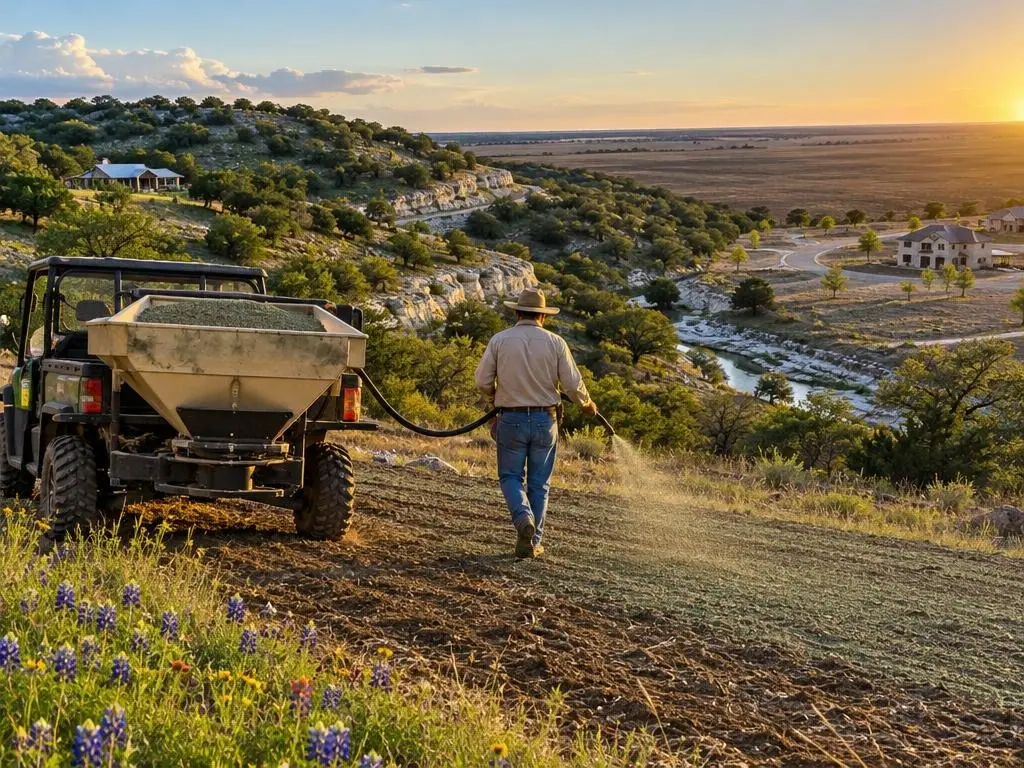
Native Seeding: Closest Published Figures
| Item | Range |
|---|---|
| Hydroseeding application, per sq ft (HomeGuide) | $0.12 to $0.35 |
| Hydroseeding add-ins, each, per sq ft (HomeGuide) | $0.02 to $0.04 |
| Erosion seeding by hand, per acre (2025 state DOT erosion-control rate schedule) | $372 |
| Native meadow, seed and prep | Set once we measure and agree on the mix |
No current published price exists for a contractor-built native meadow, so these are the closest figures from HomeGuide and a 2025 state DOT schedule. What you pay is the figure on the signed quote we write after seeing the site and agreeing on the mix.
How Native Seeding Works
1. Site and goals
We look at soil, slope, sun and what you want: meadow, lawn or erosion cover.
2. Pick the mix
Prairie, Hill Country or buffalograss, with or without wildflowers.
3. Prepare
Weeds and turf cleared, seed bed firmed for contact.
4. Seed
Hydroseeded with mulch on slopes, drilled on open flat ground.
5. First-year care
Mowing tall to knock back weeds, and patience while roots grow.
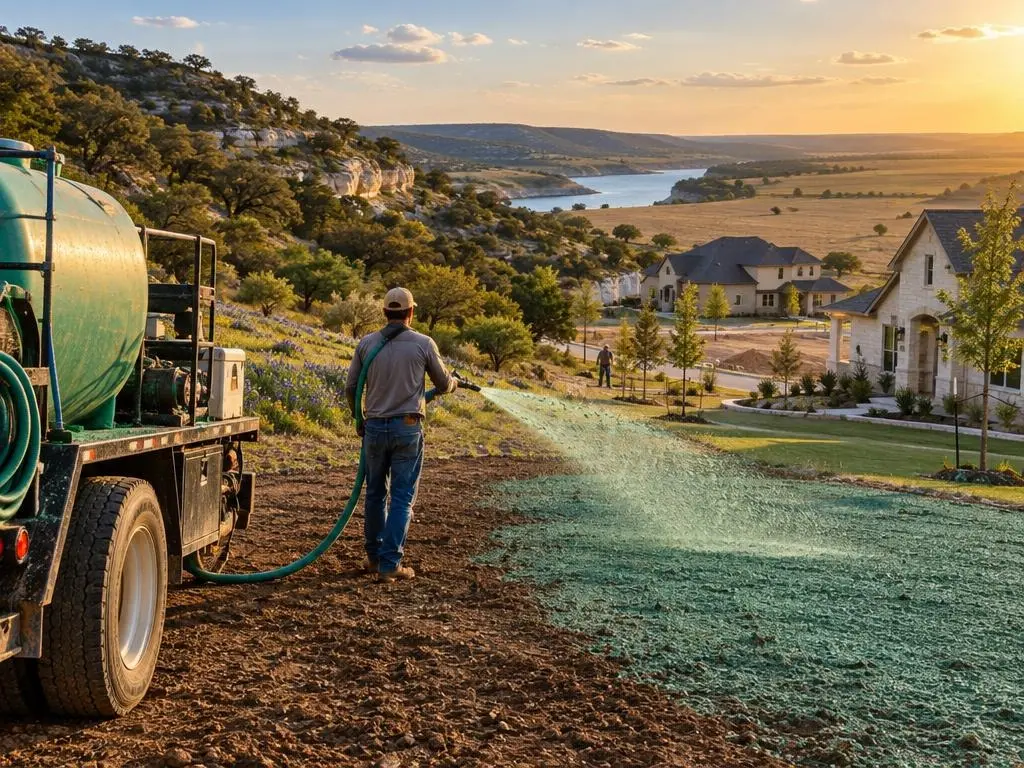
Why Choose Us for Native Grass & Wildflower Seeding
Realistic first-year advice
We tell you what year one will look like so you are not surprised.
Seed for the soil
Clay prairie and limestone hills get different mixes.
Erosion know-how
Native seeding on slopes is paired with mulch or blankets where needed.
Native Grass & Wildflower Seeding Questions
Can grass and wildflowers go down on the same day around Austin?
Sometimes, but the two often prefer different sowing windows. Warm-season native grasses do best once the soil warms in spring, while many wildflower mixes have their own recommended dates. We follow the supplier's dates for your mix and split the visit when that gives a better stand.
Will a native meadow look good the first year?
Usually not. Year one is often weedy and thin while perennial grasses root. Years two and three are when it fills in.
Can buffalograss replace my Bermuda lawn?
In sunny areas with light traffic, yes, and it needs less water. It does poorly in shade and under heavy use.
Do native grasses need irrigation?
They need water to get established. Once rooted, many survive on rainfall in normal years.
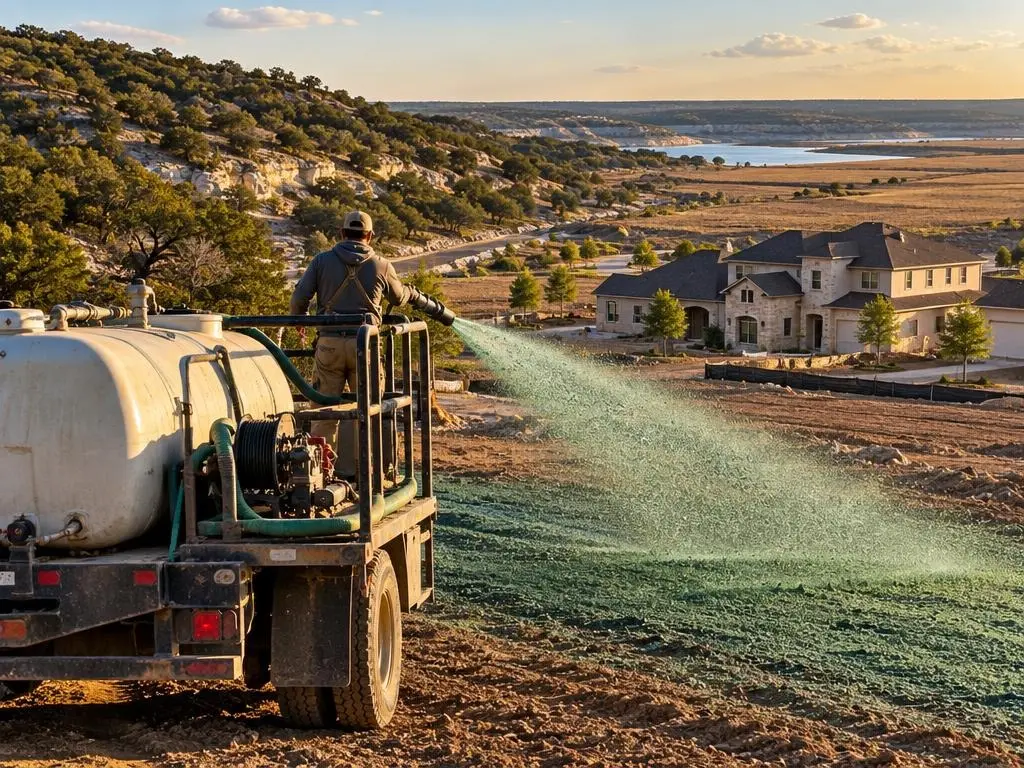
Native Grass & Wildflower Seeding Service Areas
- Hydroseeding in Austin, TX
- Hydroseeding in Round Rock, TX
- Hydroseeding in Cedar Park, TX
- Hydroseeding in Leander, TX
- Hydroseeding in Georgetown, TX
- Hydroseeding in Pflugerville, TX
- Hydroseeding in Hutto, TX
- Hydroseeding in Taylor, TX
- Hydroseeding in Elgin, TX
- Hydroseeding in Manor, TX
- Hydroseeding in Bastrop, TX
- Hydroseeding in Kyle, TX
- Hydroseeding in Buda, TX
- Hydroseeding in San Marcos, TX
- Hydroseeding in Wimberley, TX
- Hydroseeding in Dripping Springs, TX
- Hydroseeding in Lakeway, TX
- Hydroseeding in Lago Vista, TX
- Hydroseeding in Jonestown, TX
- Hydroseeding in Marble Falls, TX
- Hydroseeding in Lockhart, TX
Get a Native Grass & Wildflower Seeding Estimate
Tell us how much land and what you want it to become, and we will suggest a mix.