
Gateway to the Hill Country
Hydroseeding in Dripping Springs, TX
Native seeding, lawns and erosion control on rocky ranch land.
- Free on-site measuring and a written, itemized quote
- Seed picked for your soil: Hill Country rock or Blackland clay
- Erosion and silt fence work planned around TCEQ and city rules
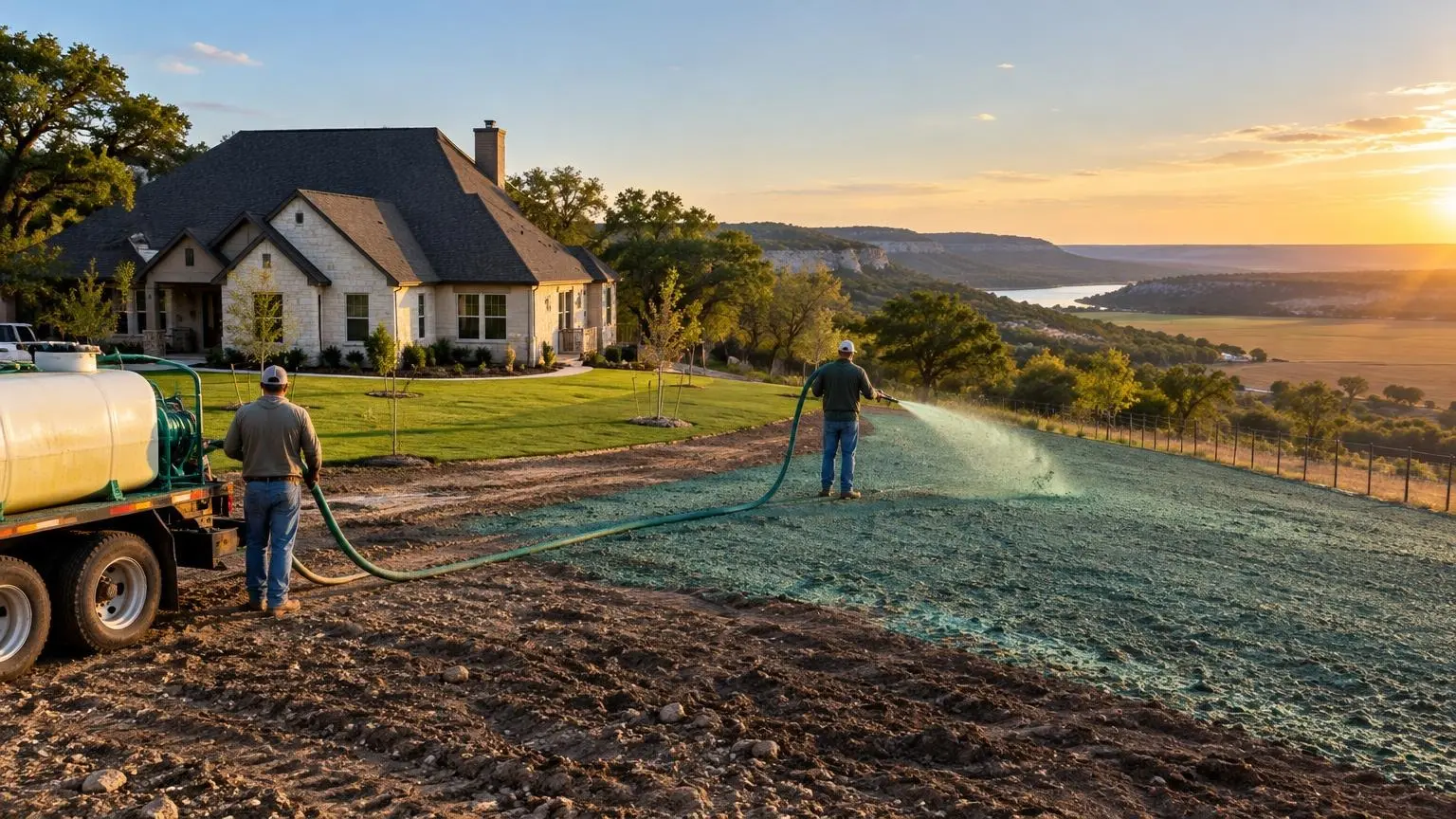
Rocky Ground, Big Lots
Hydroseeding in Dripping Springs usually means large lots, rocky ground and long dry spells. The town calls itself the Gateway to the Hill Country, and it sits on US 290 about 23 miles west of Austin. Most of the city drains southwest to Onion Creek, an east-flowing tributary of the Colorado River.
Thin soil over limestone
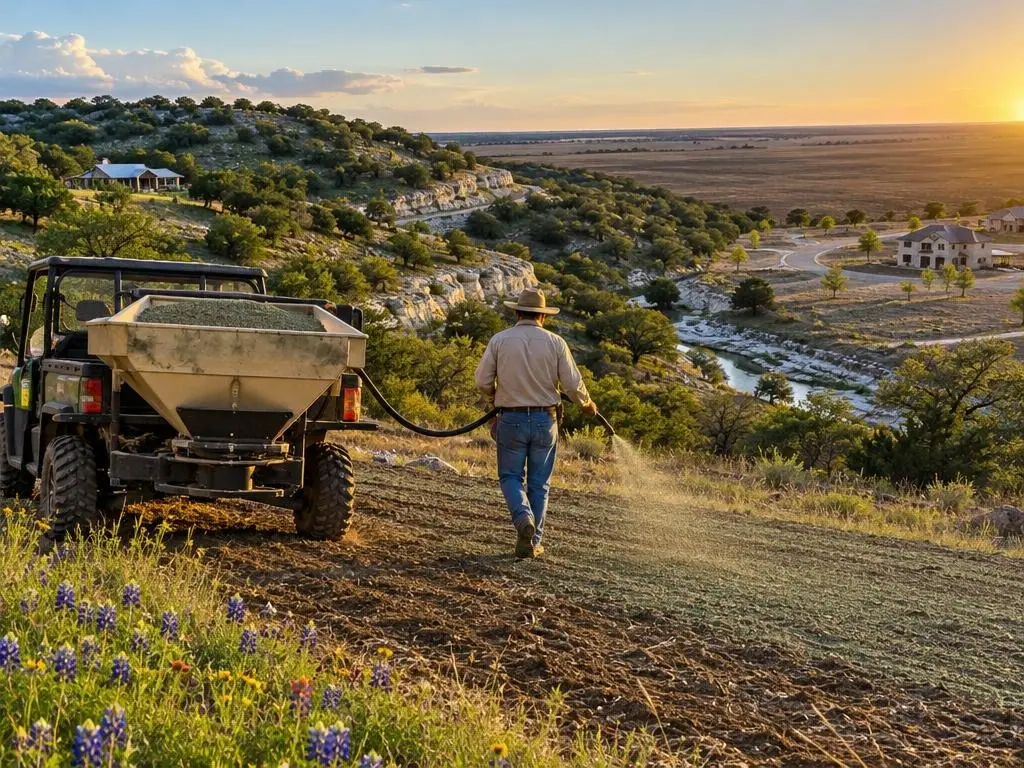
The hills west of Austin are mostly limestone with a thin covering of topsoil, which is why runoff is fast and flash flooding is common after thunderstorms. On a Dripping Springs lot that means two things: grass has little root zone unless you add soil, and bare ground erodes quickly. We often recommend topsoil for lawn areas and native grass or wildflower seeding for the rest.
Onion Creek downstream
Because most of the city drains to Onion Creek, sediment from new driveways, pads and septic fields ends up there. Silt fence below disturbed areas and hydromulch on raw cuts are simple ways to keep it on the lot.
Growth, planned
Dripping Springs is part of the Sustainable Places Project, which helps Central Texas cities plan livable places as they grow. Growth here tends to come as acreage homesites, venues and small commercial projects, each with large disturbed areas to revegetate.
Wedding capital
Dripping Springs is known as the wedding capital of Texas and is full of venues, wineries, breweries and distilleries. Lawns for ceremonies, overflow parking and pathways all need even, durable cover, and hydroseeding gets a large area green for much less than sod.
Typical Dripping Springs work
- Native grass and wildflower seeding on acreage
- Lawn installation with imported topsoil
- Septic field and driveway cut stabilization
- Silt fence and hydromulch on new builds
Get a free estimate or call (737) 271-9852.
Dripping Springs Notes
- Onion Creek. Most of Dripping Springs drains southwest to Onion Creek, an east-flowing tributary of the Colorado River.
- Hill Country gateway. The town bills itself as the Gateway to the Hill Country, the 25-county region west of Austin.
- Limestone hills. The hills west of Austin are mainly limestone with a thin covering of topsoil, which drives fast runoff and flash floods.
- Planned growth. Dripping Springs is part of the Sustainable Places Project, helping Central Texas cities plan for growth.
Dripping Springs Questions
Can you seed a septic drain field?
Yes. Drain fields need shallow-rooted grass cover to protect the soil. We seed them once the system is installed and inspected.
Should I seed native grass or a lawn on my acreage?
Many owners do both: a lawn near the house with topsoil, and native grass or wildflowers on the rest, which needs far less water.
How do you keep seed on a rocky driveway cut?
We use a heavy hydromulch or bonded fiber matrix that bonds to the surface, and blankets where it is steep.
Can you get a venue lawn ready before wedding season?
Yes, if you plan ahead. Give the grass several weeks of growing weather before heavy foot traffic.
Free Estimates in Dripping Springs, TX
Free estimates in Dripping Springs.
Hydroseeding Near Dripping Springs
- Hydroseeding in Austin, TX
- Hydroseeding in Round Rock, TX
- Hydroseeding in Cedar Park, TX
- Hydroseeding in Leander, TX
- Hydroseeding in Georgetown, TX
- Hydroseeding in Pflugerville, TX
- Hydroseeding in Hutto, TX
- Hydroseeding in Taylor, TX
- Hydroseeding in Elgin, TX
- Hydroseeding in Manor, TX
- Hydroseeding in Bastrop, TX
- Hydroseeding in Kyle, TX
- Hydroseeding in Buda, TX
- Hydroseeding in San Marcos, TX
- Hydroseeding in Wimberley, TX
- Hydroseeding in Lakeway, TX
- Hydroseeding in Lago Vista, TX
- Hydroseeding in Jonestown, TX
- Hydroseeding in Marble Falls, TX
- Hydroseeding in Lockhart, TX